The Invisible Drain: How Heat Affects MRF Labor Productivity
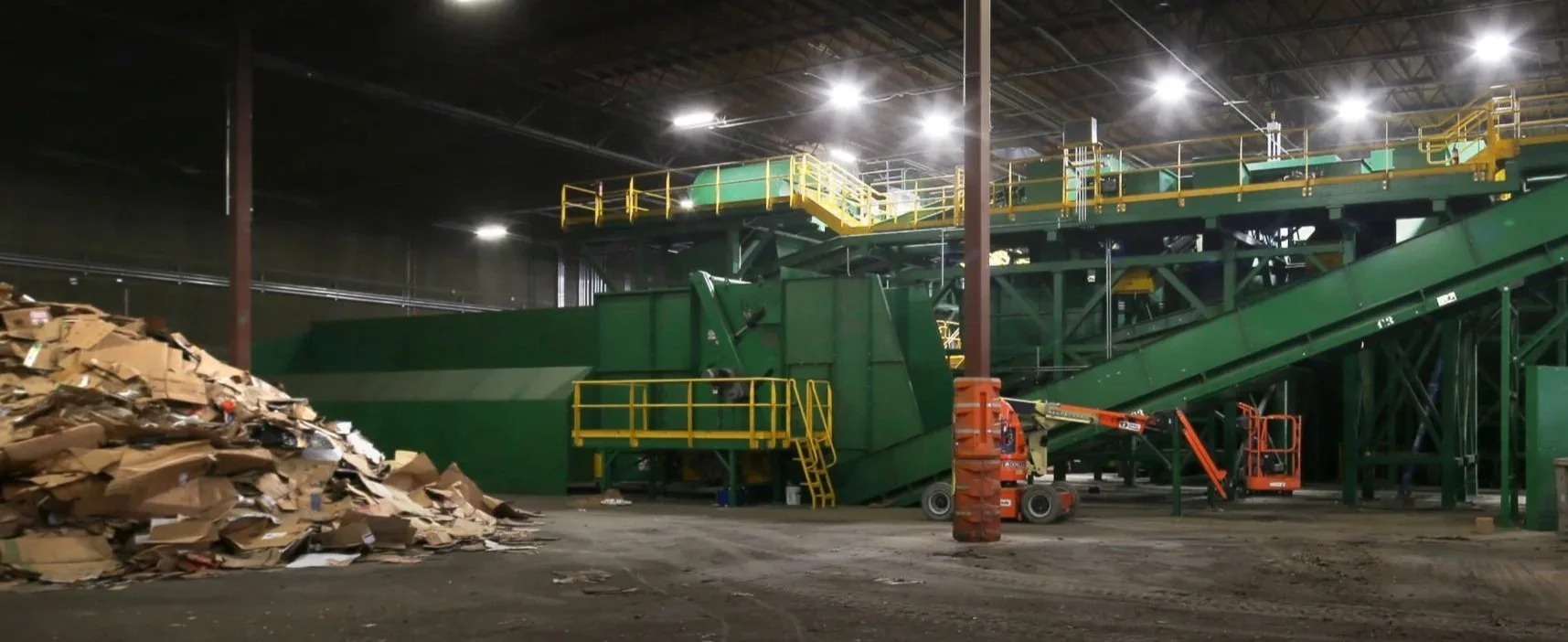
In a material recovery facility, productivity is often measured in tons processed, recovery rates, contamination percentages, and uptime. But during peak summer conditions, one of the most damaging productivity drains is often the hardest to see: heat.
“This is the hidden cost of a hot MRF floor. The line may still be running, but performance may already be slipping.”
MRF work is physical, repetitive, and fast-paced. When facility temperatures rise, the impact is not limited to worker comfort. Heat can affect focus, reaction time, stamina, attendance, retention, and ultimately the amount of recoverable material pulled from the stream.
For operators, this creates a difficult balancing act. Workers need hydration, recovery time, and safe cooling intervals. At the same time, every pause on a continuous line can feel like a threat to throughput. The mistake is viewing these two priorities as competing against each other. In reality, heat safety and production performance are directly connected.
Heat Does Not Just Slow the Body. It Slows the Line.
Manual sorting depends on speed and precision. A sorter must recognize material, decide whether it belongs in the stream, and physically remove it before it passes. That process requires both tactile response and cognitive processing.
As heat stress builds, workers may fatigue faster, react more slowly, and make more mistakes. A bottle, can, piece of cardboard, or contaminant that would normally be caught may be missed. Over time, those small misses can compound into lower recovery rates, increased contamination, and more strain on downstream quality control.
This is the hidden cost of a hot MRF floor. The line may still be running, but performance may already be slipping.
“Pushing Through” Can Cost More Than Cooling Down
In many physical environments, there is a temptation to push through heat, especially during busy shifts. But in a MRF, pushing through can create an exponential productivity problem.
A worker who is overheated may remain present at the line, but their effectiveness can decline. They may move slower, miss more material, need more frequent unplanned pauses, or become more vulnerable to heat-related illness. That creates a ripple effect across the operation.
Structured cooling intervals can feel disruptive in the moment, but they are often more predictable than unplanned slowdowns, call-offs, injuries, or turnover. A planned break allows supervisors to manage coverage, rotate workers, and keep the line moving with less performance drop-off. An unplanned heat event can interrupt the entire shift.
The question is not whether cooling breaks affect production. They do. The better question is whether structured cooling protects more production than it costs.
The Real Cost of Heat Shows Up in More Than Throughput
Heat-related productivity loss is not limited to the number of items missed on the line. It can also show up in labor logistics.
During peak summer shifts, facilities may see higher absenteeism, more early departures, more fatigue-related performance issues, and greater turnover among workers who are not prepared for the environment. Each absence creates additional pressure on the remaining team. Each replacement requires recruiting, onboarding, training, and time before the new worker reaches full productivity.
For MRF operators already dealing with tight labor markets, heat can quietly increase the cost of staffing. When a facility becomes known as difficult, exhausting, or unsafe during summer months, retention becomes harder. That makes heat management not just a safety issue, but a workforce planning issue.
Cooling Infrastructure Should Be Treated as an Operational Investment
Cooling infrastructure is sometimes viewed as a facility upgrade or employee comfort expense. In today’s MRF environment, that view is too narrow.
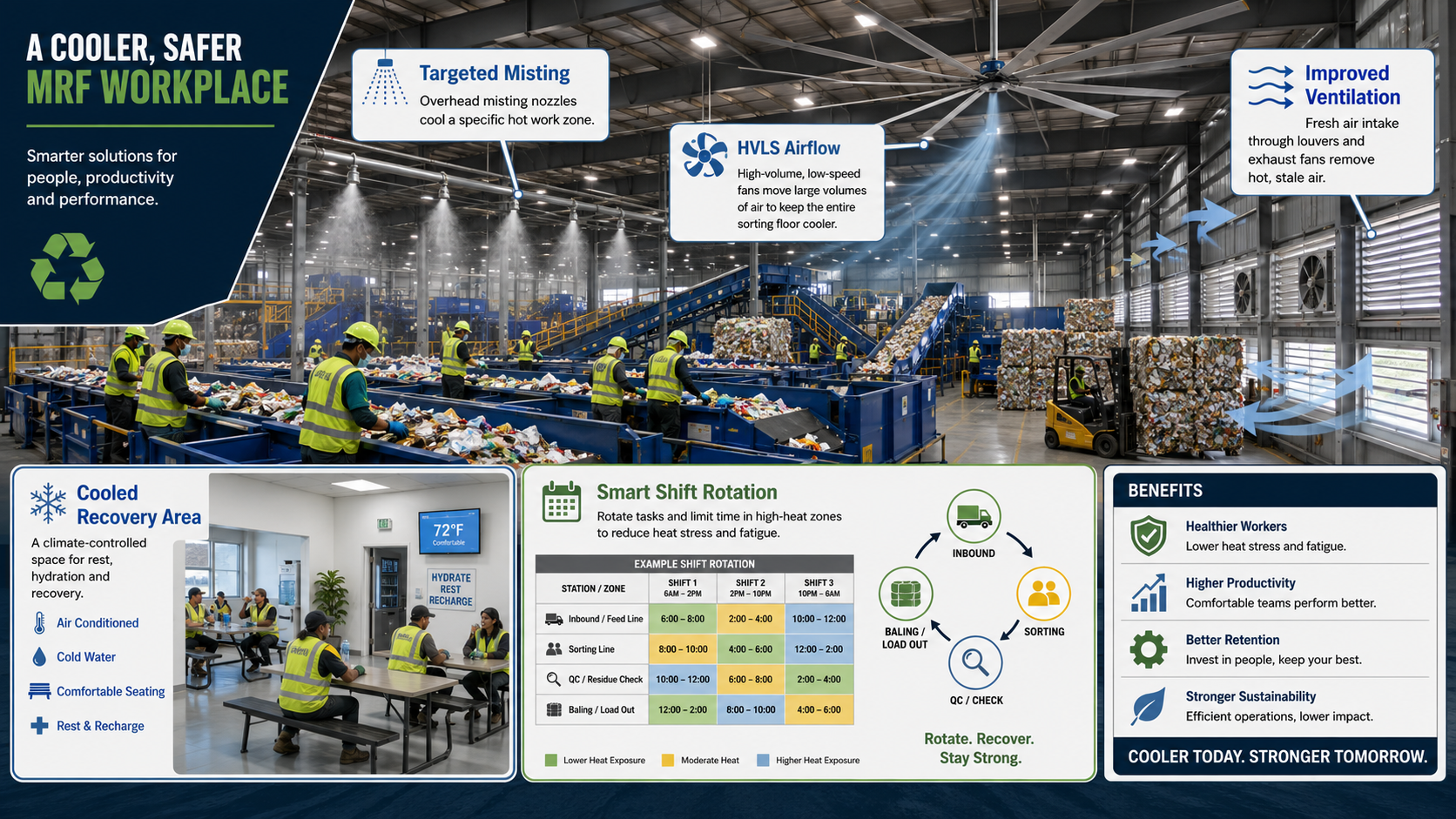
Targeted misting systems, high-velocity low-speed fans, shaded or cooled recovery areas, improved ventilation, and smart shift rotation can all help reduce the productivity loss tied to heat exposure. The key is designing these solutions around the actual MRF layout. Cooling needs are not the same at every station. Areas near equipment, compactors, docks, or enclosed sorting zones may require different solutions than open floor areas.
The most effective approach starts with measurement. Operators should compare ambient facility temperatures against line performance, recovery rates, missed picks, downtime, absenteeism, and turnover. Once those patterns are visible, cooling infrastructure becomes easier to justify. It is no longer a guess. It becomes a measurable investment tied to output, safety, and labor stability.
Wearable Technology May Help Predict Productivity Dips
As workforce technology advances, smart wearables may also play a larger role in heat safety and labor planning. Devices that monitor worker vitals, exertion, and heat exposure can help supervisors identify risk before it turns into a medical incident or productivity drop.
For MRFs, this type of information could support better break timing, station rotation, and staffing decisions. Instead of waiting until workers are visibly exhausted, facilities can respond earlier and more strategically.
Technology alone will not solve heat stress, but it can help operators move from reactive management to proactive prevention.
The Future of MRF Productivity Depends on Workforce Sustainability
MRFs are central to the circular economy. But recovery goals depend on people who can safely and consistently perform demanding work in challenging environments. As temperatures rise and heat-safety expectations continue to increase, facilities that ignore heat exposure may see the cost in lower recovery rates, higher turnover, and less reliable production.
Cooling infrastructure should not be treated as a luxury. It should be evaluated the same way operators evaluate equipment, maintenance, staffing, and line optimization. If heat reduces human performance, then reducing heat protects facility performance.
The most successful MRFs will be the ones that stop guessing about the cost of heat and start measuring it. By mapping throughput, recovery rates, absenteeism, and turnover against facility temperature, operators can see the true impact of heat on productivity.
A cooler MRF floor is not just more comfortable. It can be safer, more stable, and more productive.