Keeping the Path Clear: Why Focus is Critical in Sanitation
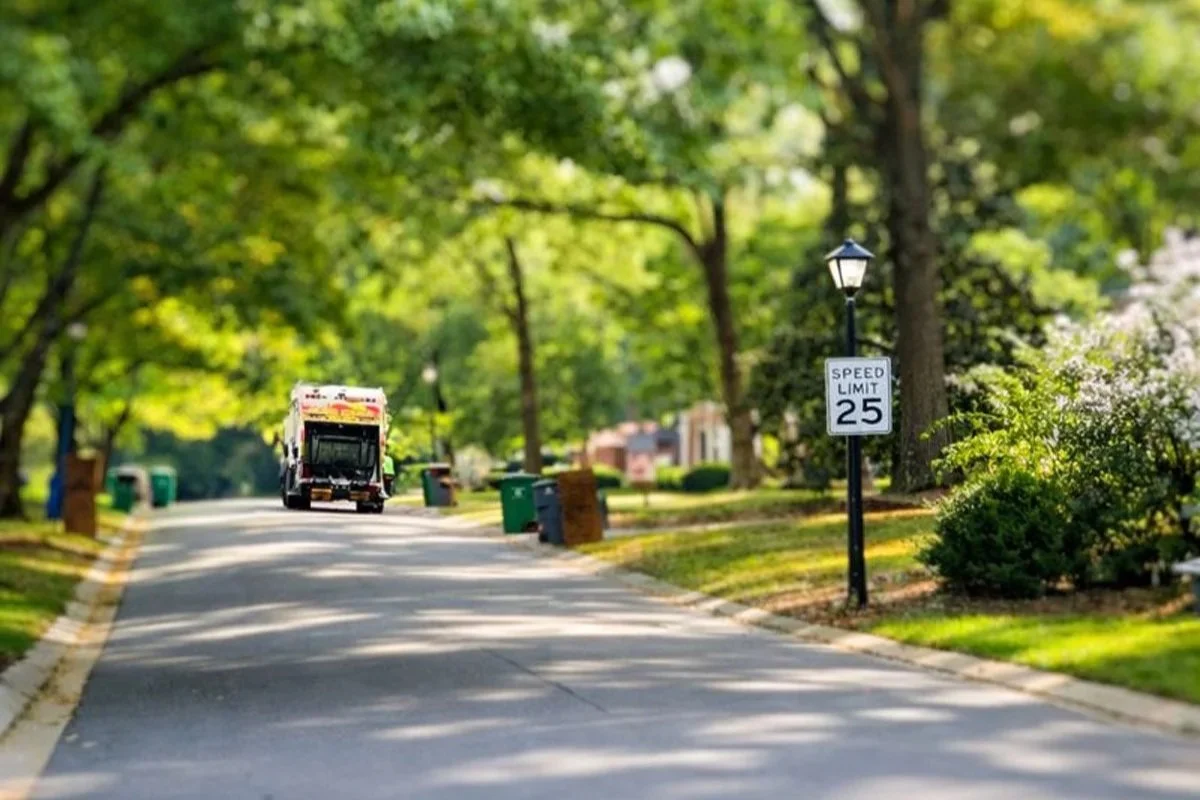
In the world of residential waste collection, the environment is never static. From darting pets and morning joggers to narrow alleyways and low-hanging branches, the "office" for a sanitation worker is full of variables.
Maintaining focus isn't just about productivity, it’s the thin line between a successful shift and a life-altering accident. At Augment, we believe that professional focus is a skill that can be sharpened. Here is how sanitation teams can eliminate distractions and stay sharp on the route.
The High Stakes of Staying Focused
In residential areas, the margin for error is remarkably slim, as even a momentary lapse in concentration can trigger a cascade of serious consequences. On a structural level, distractions often lead to significant property damage through miscalculated turns or incorrect lift heights. More critically, a lack of focus jeopardizes personal injury for the crew—such as slips, trips, or accidents involving moving machinery—and creates severe public safety risks, including the failure to spot pedestrians or children near the vehicle.
Beyond these immediate physical dangers, operational efficiency suffers when a crew is unfocused. Distractions cause routes to take longer than scheduled, which inevitably leads to increased worker fatigue. This exhaustion then fuels a hazardous cycle, further eroding concentration and making future errors even more likely.
Identifying the "Attention Thieves"
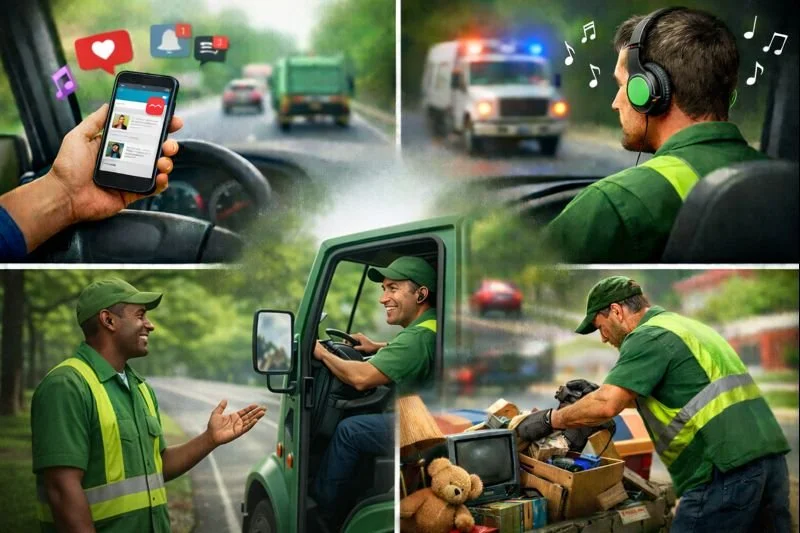
To combat distractions, workers must first recognize them. Common distractions on the route include:
Smartphones, social media notifications, or texting while the vehicle is in motion.
Loud music in the cab or wearing earbuds that block out ambient safety sounds (like sirens or backup beeps).
Engaging in deep conversations with coworkers or prolonged chatting with residents.
Focusing too much on "junk" at the curb rather than the traffic around the truck.
Practical Strategies for Professional Focus
Maintaining professional focus is a personal responsibility that begins long before the engine even starts. By adopting "Focus First" habits, crews can significantly mitigate the risks inherent in residential operations. One of the most effective strategies is the "Silent Cab" Policy, which dictates that the interior of the vehicle remains reserved strictly for operational communication; while building camaraderie is valuable, intensive storytelling and casual chatter are best saved for the breakroom to ensure the driver remains fully attuned to the environment.
Complementing this is a strict approach to Device Discipline, where personal phones are stored out of sight in a glove box or bag to eliminate digital distractions. Should a personal call become necessary, it must only be conducted once the vehicle is safely parked and the engine is turned off. Finally, maintaining constant Situational Awareness—often referred to as 360° Vision—is vital. Workers must perpetually scan the "Danger Zone" surrounding the truck, actively avoiding "tunnel vision" and never assuming that motorists or pedestrians have seen them.
How Augment Transforms Training
At Augment, we go beyond simple "don't do this" lists. Our training approach focuses on behavioral psychology and practical application:
Strict Phone Protocols: We help companies implement and enforce clear mobile device policies that prioritize driver and loader safety.
Effective Communication Tools: We teach crews how to use short, standardized hand signals and radio bursts to communicate efficiently without long, distracting dialogues.
The "Active Observer" Mindset: Our modules train workers to treat every driveway as a potential hazard, keeping the brain engaged through constant mental "what-if" scenarios.
A Safer Neighborhood Starts with You

By reducing distractions and following the structured guidance provided by Augment, sanitation workers do more than just pick up trash, they protect their teammates and the communities they serve. A focused worker is a professional worker, and a professional worker is a safe one.